Choosing the right anatomy atlas is a stressful decision, and one that is quite important. For many of you (students in medical, dental, optometry, and podiatry school) this will be one of the first decision you must make at your professional school. In order to help you sort through some of the most popular choices, let me highlight some of the pros and cons of each text. I am a firm believer that education should be tailored to the student. If your school/teacher tells you to buy a certain anatomy atlas, do not listen. This is like telling a left handed student that he/she must take a test using their right hand. You must find a text that allows you to learn best. There are many options and each has its own strengths.
One IMPORTANT HINT:
Check out each atlas on amazon.com, you can browse the pages of each book in full color by clicking the "Click To Look Inside" tab over each book. This is the best way to see what you are going to like.
1. Netter's Atlas of Human Anatomy:
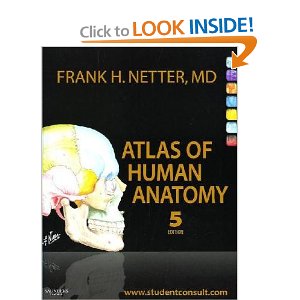
The Netter's Atlas of Human Anatomy is the best selling anatomy atlas in the country, and my personal favorite. The images are bright and colorful. The detail is crisp and memorable. I am a visual learner, and the bright images helped me focus and remember better. In fact, the images were so vibrant that I could often see them in my head during tests, allowing me to remember specific details in each image. One downside to this atlas is its relative lack of information and detail. There is no text other than anatomy labels. There are no clinical correlations. There are not as many structures labeled as some other texts. is the best selling anatomy atlas in the country, and my personal favorite. The images are bright and colorful. The detail is crisp and memorable. I am a visual learner, and the bright images helped me focus and remember better. In fact, the images were so vibrant that I could often see them in my head during tests, allowing me to remember specific details in each image. One downside to this atlas is its relative lack of information and detail. There is no text other than anatomy labels. There are no clinical correlations. There are not as many structures labeled as some other texts.
|
|
2. Rohen's Color Atlas of Anatomy:
Unfortunately for me, I did not learn about Rohen's Color Atlas of Anatomy: A Photographic Study of the Human Body until after my anatomy class. Had I known about this book, or seen it at all, I absolutely would have purchased this right off the bat. Unlike many other atlases, the focus of Rohen's are real life photographs. There are beautifully dissected bodies, bones, and radiographs showing each structure. Where the anatomy becomes confusing, Rohen's uses color labeling to help students understand where structures are located in three dimensions. The images are high definition and very memorable. The layout is crisp and clear. I can not think of a downside to Rohen's. Perhaps if you do not want to look at real photos but rather artists' renderings, this would not be for you. Because the text uses photos, it is more difficult to see the fine and subtle differences in some structures. However, in my opinion, this is real life and your practice exam will not be based on artist's anatomy drawings. until after my anatomy class. Had I known about this book, or seen it at all, I absolutely would have purchased this right off the bat. Unlike many other atlases, the focus of Rohen's are real life photographs. There are beautifully dissected bodies, bones, and radiographs showing each structure. Where the anatomy becomes confusing, Rohen's uses color labeling to help students understand where structures are located in three dimensions. The images are high definition and very memorable. The layout is crisp and clear. I can not think of a downside to Rohen's. Perhaps if you do not want to look at real photos but rather artists' renderings, this would not be for you. Because the text uses photos, it is more difficult to see the fine and subtle differences in some structures. However, in my opinion, this is real life and your practice exam will not be based on artist's anatomy drawings.
|
|
3. Gilroy's Atlas of Anatomy
Gilroy's Atlas of Anatomy does not seem like anything special at first glance. However, I have never met someone who used the Gilroy atlas and did not love it. In fact, it holds the #2 position for Best Selling Anatomy Books on Amazon does not seem like anything special at first glance. However, I have never met someone who used the Gilroy atlas and did not love it. In fact, it holds the #2 position for Best Selling Anatomy Books on Amazon ! One very useful aspect of the Gilroy text are the clinically oriented tables and boxes. In nearly every section, the text focuses on some of the most important clinical correlations related to the structures being discussed. These tables are clear and concise. While you can achieve the same information with a clinical anatomy book, some prefer to have both sets of information in the same place. The downside in my opinion are the quite pedestrian images, but this does not bother most students. ! One very useful aspect of the Gilroy text are the clinically oriented tables and boxes. In nearly every section, the text focuses on some of the most important clinical correlations related to the structures being discussed. These tables are clear and concise. While you can achieve the same information with a clinical anatomy book, some prefer to have both sets of information in the same place. The downside in my opinion are the quite pedestrian images, but this does not bother most students.
|
|
4. Grant's Atlas of Anatomy:
Grant's Atlas of Anatomy is a well known text with a great history and crisp images similar to the Gilroy text. Many students use the companion, Grant's Dissector is a well known text with a great history and crisp images similar to the Gilroy text. Many students use the companion, Grant's Dissector , in the anatomy lab. The images in the dissector are similar to the full text book. Many students at my school enjoyed this text and felt like there was a perfect mix of anatomy plates to clinical correlations in the book. This is a no-frills purchase: it is one of the cheaper atlases but provides everything a student would need. , in the anatomy lab. The images in the dissector are similar to the full text book. Many students at my school enjoyed this text and felt like there was a perfect mix of anatomy plates to clinical correlations in the book. This is a no-frills purchase: it is one of the cheaper atlases but provides everything a student would need.
|
|
5. Thieme's Atlas of Anatomy:
The Thieme General Atlas of Anatomy is well liked by its users, just Google the title and you will find loads of students who love it. However, I have never actually met a student who used it. We had a couple copies in our library, but no one every looked at them. If you are a textbook lover, you might want to look at the Thieme book. It reads more like a textbook than an anatomy atlas. is well liked by its users, just Google the title and you will find loads of students who love it. However, I have never actually met a student who used it. We had a couple copies in our library, but no one every looked at them. If you are a textbook lover, you might want to look at the Thieme book. It reads more like a textbook than an anatomy atlas.
|
|
6. Clemente's Anatomy:
Little known Clemente's Anatomy: A Regional Atlas of the Human Body is a sort of cult-favorite atlas. Many believe the illustrations in Clemente are the best on the market. They are clear and straight forward. There is a good mix of clinical information. The price is low, and the satisfaction is high. I have not used Clemente's but those who have used it say that they would use it again. is a sort of cult-favorite atlas. Many believe the illustrations in Clemente are the best on the market. They are clear and straight forward. There is a good mix of clinical information. The price is low, and the satisfaction is high. I have not used Clemente's but those who have used it say that they would use it again.
|
|
7. Gray's Atlas of Anatomy:
Gray’s Atlas of Anatomy is one of histories best-known atlases. However, I think that the atlases listed above have surpassed this historical text. There are newer versions, but I fear the TV show named after the atlas will forever be more famous than that atlas itself. The images are nice and there are a number of photos and radiologic images which accompany the anatomy illustrates. Because of Gray's historical status, it warrants a few minutes to flip through the pages, but I would not purchase this text myself. is one of histories best-known atlases. However, I think that the atlases listed above have surpassed this historical text. There are newer versions, but I fear the TV show named after the atlas will forever be more famous than that atlas itself. The images are nice and there are a number of photos and radiologic images which accompany the anatomy illustrates. Because of Gray's historical status, it warrants a few minutes to flip through the pages, but I would not purchase this text myself.
|
|
8. Sabotta Atlas of Antaomy
Sobotta – Atlas of Human Anatomy was introduced to me through a reader of this site. I did not have any exposure to it prior to the comment below. After reviewing the atlas at length I must admit that it is very impressive. The images are clear. There is ample text to explain clinical correlations. And, most importantly, the text can be purchased in a two volume set. This will decrease the load on your back by about 15 pounds every day. This is actually a very nice feature was introduced to me through a reader of this site. I did not have any exposure to it prior to the comment below. After reviewing the atlas at length I must admit that it is very impressive. The images are clear. There is ample text to explain clinical correlations. And, most importantly, the text can be purchased in a two volume set. This will decrease the load on your back by about 15 pounds every day. This is actually a very nice feature
|
|
Did you use a great atlas that is not on this list? Tell me about it!



 My name is Andrew and I am a first year resident training to be an ophthalmologist. I created ShortWhiteCoats to provide medical students, residents, and the public with all the information I spent so many hours looking for during medical school.
20 pings
Skip to comment form ↓